Nature doesn’t keep the same pace all year. It grows, ripens, sheds and rests. Yet we tend to ask the same energy of ourselves in July as we do in January. The Five Elements offer a gentler way to move through the year.
The Five Elements: a different way of reading the year
The Five Elements (Wood, Fire, Earth, Metal and Water) come from a traditional East Asian way of understanding nature and the body. Each element is linked to a season, and each season asks something slightly different of us: how we move, how we breathe, what we eat.
At Shizuka, in the hills of Hepburn Springs near Daylesford, this idea shapes our Seasonal Yoga Retreats and what appears on the table. It is less a set of rules than a habit of noticing.
Spring — Wood
Growth · renewal · movement
In Five Elements thinking, spring belongs to Wood. In the garden, mornings are cool and damp, and new leaves appear almost overnight. The body wants to move again after winter.
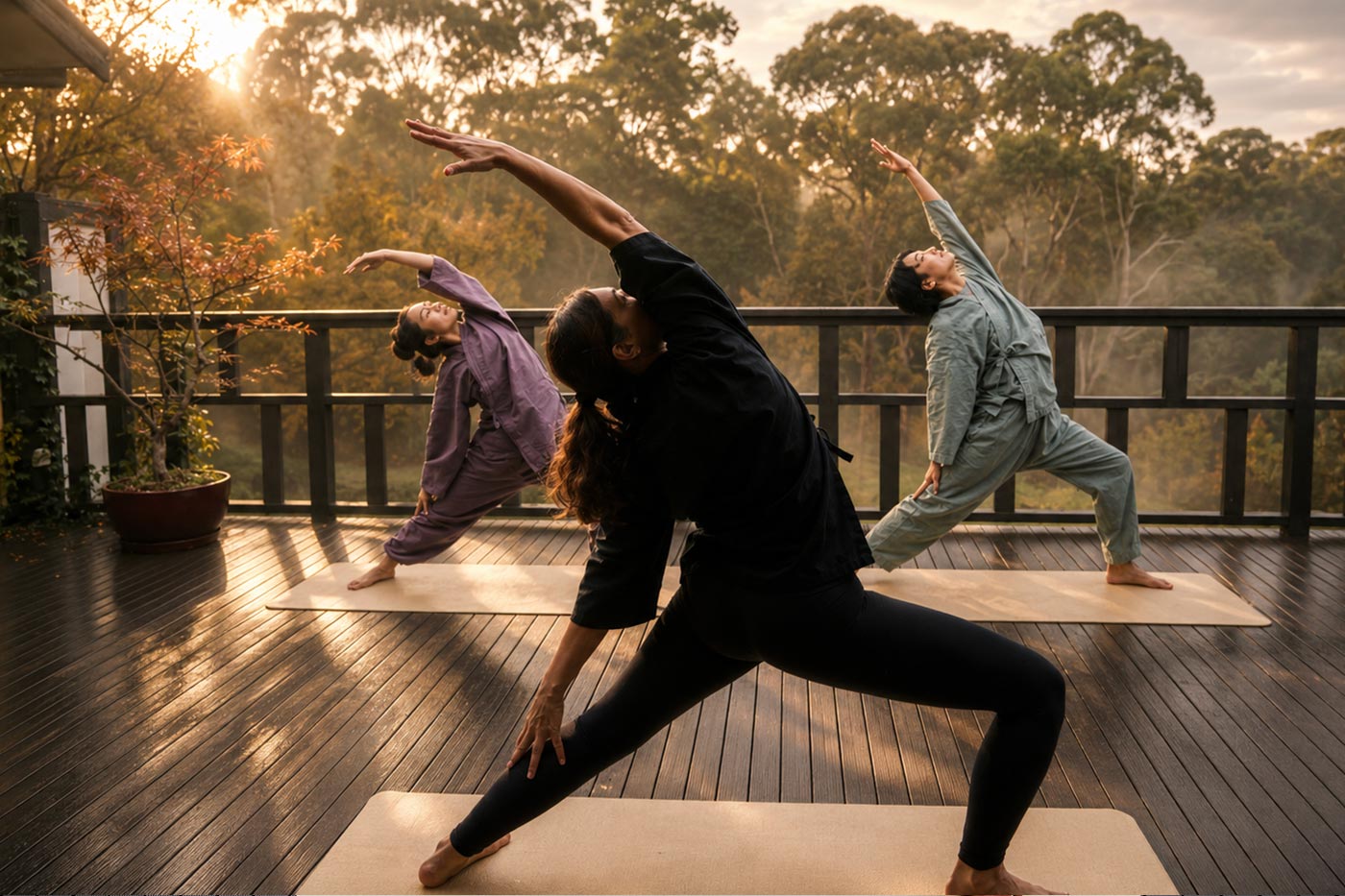
A spring practice is the most active of the year: twists, side bends and long stretches through the ribs, with the breath reaching into places that tightened in the cold.
In a Japanese kitchen, spring is a season of young things: tender greens, asparagus and fresh sprouts, cooked lightly or simply dressed. Heavy winter dishes are put away.
Summer — Fire
Joy · openness · connection
Summer evenings stay light for a long time, and life naturally turns outward: more conversation, more time in the open air.
The practice softens to match. Movement becomes more open across the chest and shoulders, and the breath is allowed to lengthen and slow, especially in the warmth of the afternoon.
Summer food in Japan is about keeping cool: chilled dishes, crisp vegetables, ripe fruit and very little fuss.
Late Summer — Earth
Grounding · nourishment · balance
Late summer is the pause between abundance and the quieter months. The garden is heavy with growth, and the light begins to soften at the edges of the day.
Practice becomes steadier: balanced postures, feet firmly on the floor, attention drawn to the centre of the body. It is a season for feeling held rather than stretched.
In the kitchen, summer’s produce is still here, but the first warm, savoury dishes begin to return.
Autumn — Metal
Reflection · release · letting go
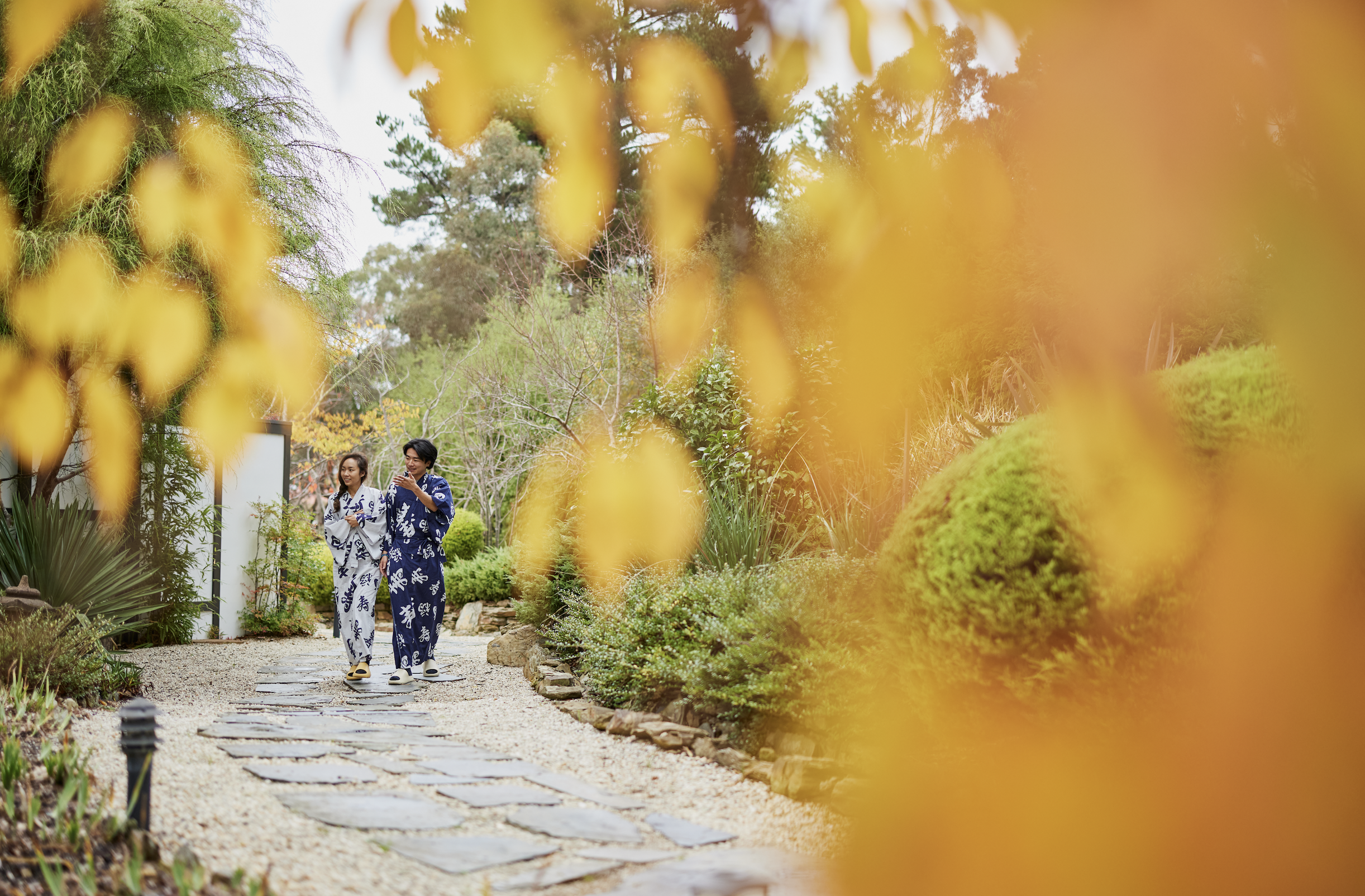
As the maples turn and the days shorten, attention naturally turns inward.
The practice slows. Movements are fewer and longer, the breath leads, and more time is given to sitting quietly.
This is when mushrooms, root vegetables and slow-simmered dishes appear, along with the warmth of a good dashi on a cool evening. Like the trees outside, autumn reminds us that letting go is part of the cycle.
Winter — Water
Stillness · depth · rest
Winter is the most inward point of the year. Mornings are crisp, and steam rises thickly from a warm bath.
The practice becomes restorative: supported postures held for several minutes, slow breathing and long rests. It is less about effort and more about recovery.
Japanese winter cooking brings warmth in quiet ways, with miso, daikon, mushrooms, grains and dishes left to simmer gently. Perhaps the most useful lesson of winter is that rest is not inactivity. It is how we prepare to begin again.

Paying attention to the season
The Five Elements are a traditional way of seeing the world, not modern medical or nutritional advice. But the larger idea is simple enough to try anywhere:
Notice what is growing. Notice the weather. Notice your own energy.
Eat differently in January than you do in July. Be more outward when the days are long, and a little quieter when they are short.
At Shizuka, the seasons shape our garden, our food, our bathing and our retreats. Seasonal living often begins with nothing more than paying attention.
Experience the seasons at Shizuka
Our Seasonal Yoga Retreats bring yoga, meditation, Japanese bathing, massage and seasonal meals together over two or three nights in Hepburn Springs. Each retreat follows the season in which it is held.